- Distance & Quick Facts
- Segment-by-Segment Breakdown
- Best Route & Highway Guide
- About Mehandipur Balaji Temple
- The Three Main Deities
- Temple Timings & Darshan
- Rituals & What to Expect
- Temple Rules & Guidelines
- Travel with Satnam Travels
- All Travel Modes Compared
- Best Time to Visit
- Nearby Places Worth Visiting
- Trip Planning Checklist
- Frequently Asked Questions
Mehandipur Balaji is not a temple you visit out of curiosity. People travel here with a specific purpose — seeking the blessings of Lord Hanuman, finding relief from difficulties, or fulfilling a vow made in a moment of need. The atmosphere inside is unlike any other temple in Rajasthan, and the journey from Jaipur, at just over 100 km, makes it one of the most accessible sacred sites in the state.
The Jaipur to Mehandipur Balaji distance by road is approximately 100 to 110 kilometres — a straightforward 2 to 2.5 hour drive along well-connected highways. Most devotees make this as a same-day trip, leaving Jaipur early in the morning and returning by afternoon. But understanding the journey properly — the route, the temple protocols, the best time to arrive for darshan — makes all the difference between a rushed visit and a meaningful one.
This guide covers everything: the Jaipur to Mehandipur Balaji route with a segment-by-segment breakdown, temple timings and darshan procedures, detailed information about the three main deities, what the rituals actually involve, important temple guidelines, and practical planning tips so your trip goes smoothly from the moment you leave Jaipur to the moment you return.
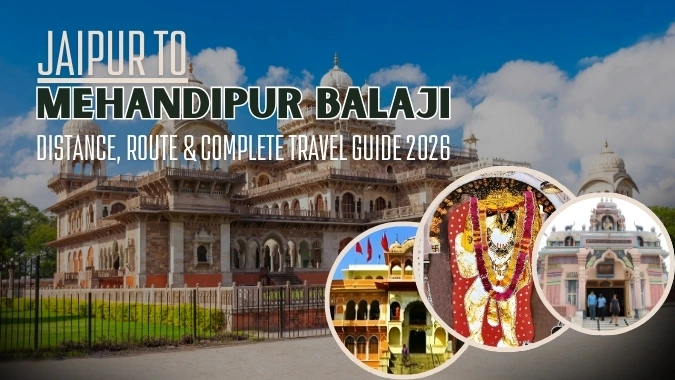
Jaipur to Mehandipur Balaji Distance — Quick Reference
The most direct and commonly used route — via Bassi and Dausa on NH21 — covers approximately 105 kilometres and takes 2 to 2.5 hours under normal weekday traffic. On Tuesdays and Saturdays, which are the busiest days at the temple, the final few kilometres into Mehandipur can add 30–45 minutes due to heavy devotee traffic. Plan accordingly if you're visiting on these days.
Segment-by-Segment Distance Breakdown
Understanding the distance from Jaipur to Mehandipur Balaji by each leg of the journey helps you identify fuel stops, rest points, and where to watch for traffic build-up near the temple.
| Route Segment | Distance | Drive Time | What to Know |
|---|---|---|---|
| Jaipur → Bassi | ~30 km | 35–40 min | NH21 — fast exit from city, light highway traffic |
| Bassi → Dausa | ~35 km | 35–40 min | Good four-lane highway, fuel stations available |
| Dausa → Mehandipur Balaji | ~40 km | 40–55 min | State highway, narrower near temple; heavy on Tue/Sat |
| Total Journey | ~105 km | 2–2.5 hrs | Start before 6 AM on busy days for smooth arrival |
Best Route from Jaipur to Mehandipur Balaji
There is one main route for this journey and it is genuinely the best option — direct, well-maintained, and clearly signposted throughout. Unlike some Rajasthan road trips where route choice requires real deliberation, the best route from Jaipur to Mehandipur Balaji is straightforward:
About Mehandipur Balaji Temple
Mehandipur Balaji is not simply a Hanuman temple in the conventional sense. It is one of the most spiritually unusual temples in India — a place that has been drawing devotees for generations specifically because of its association with healing, protection from negative forces, and spiritual intervention in difficult life circumstances.
The temple is situated in a narrow gorge between two hills in the Dausa district of Rajasthan, approximately 100 km from Jaipur. The main idol of Shri Balaji (Lord Hanuman) is a swayambhu — a self-manifested divine form that emerged naturally from the rock face rather than being installed by human hands. This distinction is central to the temple's spiritual significance; the deity is considered to be alive and actively present in a way that many devotees feel immediately upon entering.
What makes Mehandipur distinctly different from other pilgrimage sites in Rajasthan is its atmosphere. The temple complex is quiet in a way that is different from peaceful — concentrated, purposeful, and charged with the specific energy of tens of thousands of people who have come here carrying very real burdens. First-time visitors are sometimes overwhelmed by this. Going in with some understanding of the temple's nature and protocols makes the experience more meaningful and less disorienting.
Welcome to Satnam Travels
The Three Main Deities of Mehandipur Balaji
Three divine presences are worshipped within the Mehandipur Balaji temple complex, each with a specific spiritual role. Understanding who they are deepens the meaning of the darshan significantly.
Shri Balaji (Lord Hanuman)
The principal deity — a swayambhu (self-manifested) form of Lord Hanuman that emerged from the natural rock face. Balaji is worshipped here as the supreme protector and remover of obstacles, afflictions, and negative energies. The idol is ancient and imposing; devotees believe a direct appeal to Balaji at this specific spot carries extraordinary power.
Pret Raj Sarkar
Literally "the King of Spirits" — a deity who acts as a divine judge overseeing matters related to spirits and souls. Pret Raj Sarkar is worshipped specifically in relation to issues of spiritual disturbance, possession, and the resolution of karmic debts. Offerings of specific food items are made to this deity by devotees seeking intervention in such matters.
Kotwal Bhairav Baba
Bhairav (a fierce form of Shiva) serves as the "kotwal" — the guardian officer — of the temple complex. Devotees seek his blessings for protection and to ward off malevolent influences. His shrine is visited as part of the complete darshan circuit, and specific offerings including liquor (placed outside the temple only) are traditional at Bhairav shrines.
Mehandipur Balaji Temple Timings & Darshan Guide
Timing your visit well is the single most important planning decision for this trip. The difference between arriving at 7 AM and arriving at 11 AM on a Saturday is the difference between a calm, meaningful darshan and a two-hour queue in intense heat.
Rituals, Prasad & What to Expect Inside
Mehandipur Balaji has specific rituals and traditions that are followed by most devotees. Understanding them before you arrive — especially if this is your first visit — helps you participate meaningfully and avoids any inadvertent missteps in the temple environment.
Temple Rules & Visitor Guidelines
Mehandipur Balaji has specific rules that are taken seriously by the temple administration and the vast majority of devotees. Respecting these guidelines is not just protocol — it is considered essential to maintaining the spiritual integrity of the temple.
🔱 Important Rules for All Visitors
Travel to Mehandipur Balaji the Right Way — with Satnam Travels
A pilgrimage to Mehandipur Balaji is not the same as a leisure road trip. Devotees arrive with a specific spiritual purpose, often in an emotionally significant state of mind. The last thing you need is driver uncertainty, vehicle problems, or the stress of navigating unfamiliar roads and temple-area traffic. Satnam Travels provides the calm, reliable, door-to-door transport that sacred journeys deserve.
Drivers Who Know This Route
The Jaipur–Mehandipur run is one of the most frequently booked pilgrimage routes in our service. Our drivers know the fastest exit from Jaipur in early morning, where to park near the temple on busy days, and exactly how much extra time Tuesday and Saturday visits need. This practical knowledge matters on a same-day trip.
Early Pickup, Any Time
Departing at 5:30 AM for an early darshan? No problem. Satnam Travels accommodates pre-dawn departures without additional charges or last-minute rescheduling. Pickup directly from your home, hotel, or dharamshala anywhere in Jaipur — on time, every time.
Safe, Comfortable Vehicles
All vehicles are GPS-tracked, air-conditioned, regularly serviced, and commercially insured. For families traveling with elderly members or young children on this spiritually significant journey, vehicle reliability and driver behaviour both matter. Our standards on both are consistent.
Wait & Return Service
Most Mehandipur visits take 3 to 5 hours from arrival — including darshan, the complete ritual circuit, prasad, and time at all three shrines. Our drivers wait at the designated parking area and are available whenever you are ready to leave. No calls, no chasing, no pressure to rush your darshan.
Combined Itinerary on Request
Want to include Chand Baori stepwell at Abhaneri on the same trip? Or stop at the Dausa Fort on the way back? Combined itinerary bookings are accommodated — simply mention your preferences at the time of booking and the timing is planned around your Mehandipur darshan, not the other way around.
Transparent, Honest Pricing
The fare quoted includes driver charges, fuel, and return — with no extras added on the day. Pilgrim routes attract opportunistic pricing; with an advance booking, you know the full cost before you leave Jaipur. No negotiation at 5 AM, no surprises at the end.
Book your Mehandipur Balaji cab in advance — especially for Tuesdays, Saturdays, and festival days when vehicles fill quickly.
Book Your Cab Now →All Travel Options: Jaipur to Mehandipur Balaji

Private Cab
- Capacity: 6-7 Passengers
- Luggage: 3-4 Bags
- Features: AC, Comfortable Seats, Ample Legroom, Music System

Innova
- Capacity: 6-7 Passengers
- Luggage: 3-4 Bags
- Features: Reclining Seats, Powerful AC, Airbags, Touchscreen Display

SUV
- Capacity: 4-6 Passengers
- Luggage: 3-4 Bags
- Features: Leather Interiors, Cruise Control, Hill Assist, Powerful Drive

Tempo Traveller
- Capacity: 12-20 Passengers
- Luggage: Large Luggage Space
- Features: Push-back Seats, Powerful AC, Music System, Group Travel Friendly
.webp)
Force Urbania
- Capacity: 9-13 Passengers
- Luggage: Large Hold
- Features: Spacious Cabin, Powerful AC, Comfortable Seats, USB Charging, Safety Features

Self-Drive
- Capacity: 6-7 Passengers
- Luggage: 3-4 Bags
- Features: Daily and Multi-day Hire, Insurance Included, Valid Licence and ID Required
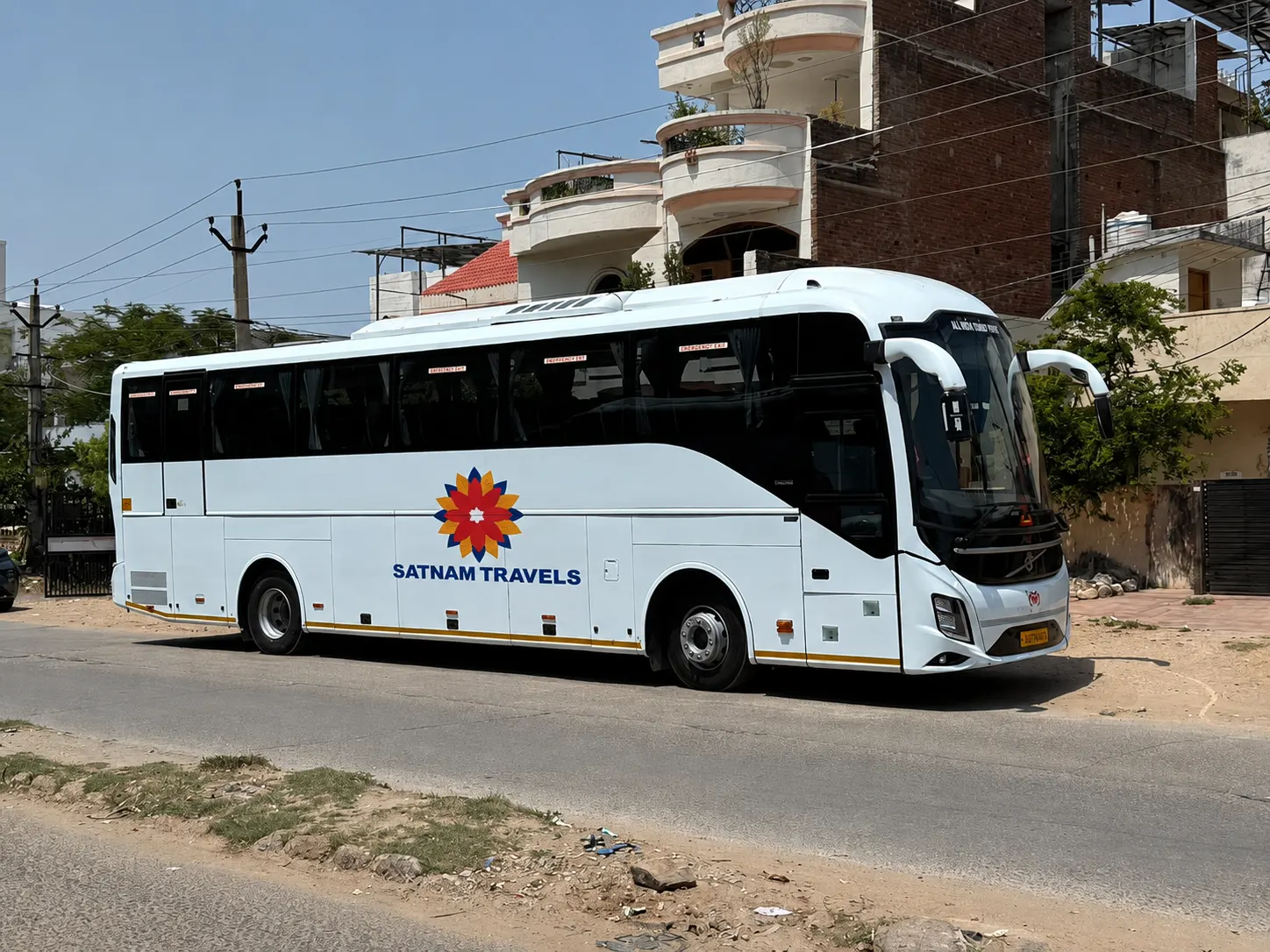
Volvo 9600
- Capacity: 45+ Passengers
- Luggage: Large Under-floor Luggage Hold
- Features: Push-back Seats, Powerful AC, Smooth Suspension, Music System

MG Glider Bus
- Capacity: 45+ Passengers
- Luggage: Large Luggage Hold
- Features: Premium Interiors, Powerful AC, Comfortable Seats, Long Route Ready
Best Time to Visit Mehandipur Balaji from Jaipur
The temple is open year-round and devotees visit in every season. That said, the experience varies meaningfully by time of year — both in terms of the journey from Jaipur and conditions at the temple itself.
October – March
The ideal time to make this pilgrimage. The Jaipur to Mehandipur Balaji road journey is comfortable in cool weather, and the temple environment is pleasant rather than exhausting.
- Cool temperatures make the temple complex, which has limited shade, comfortable
- Hanuman Jayanti (usually April) approaches — visit slightly before for moderate crowds
- Early morning departures at 5:30 AM are easier in cooler months
- The return journey in afternoon is not punishing in winter sun
April – June
Summer in Rajasthan is intense — but Mehandipur remains one of the busiest pilgrimage seasons because many festivals fall in these months, including Hanuman Jayanti.
- Depart no later than 5:30 AM to arrive before the heat builds
- Carry 2+ litres of water per person — the temple area has limited shade
- Darshan is best completed by 10 AM before temperatures peak
- Hanuman Jayanti draws massive crowds — add 2+ hours to your timeline
July – September
Monsoon is a quieter period at the temple — fewer devotees, cooler temperatures, and the surrounding landscape is green. A perfectly valid time to visit with some adjustments.
- Check NH21 conditions before departure — occasional waterlogging after heavy rain
- The gorge location of the temple means the area feels especially atmospheric in rains
- Crowds are noticeably lighter on non-festival days
- Accommodation in Dausa if you want to extend the trip is easier to book
Nearby Places Worth Combining with Your Visit
If you are making the journey from Jaipur, several genuinely impressive sites sit within easy reach of Mehandipur Balaji. Combining one or two into the same trip adds significant value to the day, particularly if you are traveling with family members who would benefit from a broader itinerary.
Chand Baori — Abhaneri
One of the most extraordinary stepwells in the world — 3,500 steps arranged in perfect geometric symmetry descending 30 metres into the earth. Built in the 9th–10th century by King Chanda of the Nikumbha dynasty. Most travelers have seen it in film sets (The Dark Knight Rises was partially filmed here) without knowing its name. About 35 km from Mehandipur, this is one of Rajasthan's most underrated wonders and is entirely feasible as a combined visit. Open sunrise to sunset; free entry.
Harshat Mata Temple — Abhaneri
Directly adjacent to Chand Baori, the Harshat Mata Temple is a 10th-century Hindu temple dedicated to the goddess of joy (Harshat = happiness, joy). The temple was partially demolished during medieval invasions; the remaining carved panels, pillar fragments, and sculptures scattered across the site have a haunting beauty. The Archaeological Survey of India maintains the site and the carved stonework is remarkable. Visit this and Chand Baori together — they share the same entrance area.
Dausa Fort & Meena Village
Dausa town sits on the route back to Jaipur and its hill fort — though partially ruined — offers exceptional panoramic views over the surrounding countryside. The fort has historical significance as an early capital of the Kachhawa (Kachwaha) clan, the dynasty that later built Jaipur's Amer Fort. The base town of Dausa also offers good highway restaurants if you want a proper meal before the return drive. 40 km from Mehandipur, directly on the route back.
Complete Trip Checklist: Jaipur to Mehandipur Balaji
A same-day pilgrimage trip requires specific preparation that is different from a leisure drive. These are the things that genuinely matter:
- Depart by 5:30–6 AM — This single decision determines whether your darshan is peaceful or rushed. The difference between 7 AM and 10 AM at the temple is dramatic on busy days
- Avoid Tuesday and Saturday if possible — If you can visit on any other day, do. The spiritual atmosphere is present every day; the crowds are not
- Leave phones on silent, not vibrate — The temple's no-photography rule extends to the respectful use of devices; keep yours out of sight inside the complex
- Dress simply and modestly — Covered shoulders, covered legs, preferably light colours. Keep a dupatta or shawl in the car for family members who may need it
- Do not bring food into the complex — Temple rules prohibit outside food. Eat your breakfast before entering and plan to eat after returning to your vehicle
- Carry cash in small denominations — Prasad shops, parking, donations, and small purchases near the temple are all cash transactions. Have ₹500–1,000 in small notes
- Consume prasad at the temple — Do not take it home. This is a firm tradition at Mehandipur and is considered important for your own benefit, not just protocol
- Plan 3–4 hours at the temple minimum — A proper visit to all three shrines, prasad, and the ritual circuit takes time. Don't rush; this is the point of the journey
- Elderly visitors: inform your driver — The walk from parking to the main sanctum involves stairs and uneven surfaces. Alert your driver so they can park as close as possible
- If combining Abhaneri, visit before Mehandipur — Do Chand Baori first (it's on the way), then continue to the temple. You'll arrive at Mehandipur calmer and the timing works naturally
Welcome to Satnam Travels
Frequently Asked Questions
The Jaipur to Mehandipur Balaji journey is one of the most accessible and spiritually significant same-day trips in Rajasthan. At just 105 km on well-connected highways, the distance is manageable — but the temple you reach at the end is unlike anything else in the state. The swayambhu Balaji idol, the three distinct shrines, the specific rituals, and the concentrated devotional energy of the place make it an experience that stays with most visitors long after they return.
Leave early, dress appropriately, follow the temple guidelines, and give yourself enough time — 3 to 4 hours minimum — to do the visit properly. Combine Chand Baori at Abhaneri on the same trip if you can; the two sites complement each other perfectly. And for the journey itself, Satnam Travels provides the kind of reliable, respectful, door-to-door cab service that pilgrimage journeys deserve — with early pickup, experienced drivers who know the route, and the patience to wait while you complete your darshan without any rush.