
Jaipur gives you palaces and forts baking in desert sun. Mount Abu gives you cool mornings, mist rolling off forested Aravalli ridgelines, and the kind of quiet that Rajasthan's busier cities never quite manage. The road between them is one of the most scenically satisfying drives in the state.
The Jaipur to Mount Abu distance by road is approximately 480 to 500 kilometres, depending on the route you take. It's a long drive — honest about that — but the journey is broken naturally by interesting towns and the dramatic final climb through the hills makes arrival feel genuinely earned.
This guide covers everything you need before you leave: exact distances, route options with honest assessments of each, the three stopover towns worth your time, a complete comparison of every travel mode, what the journey actually costs, and what to do once you get there. Whether you're driving yourself, booking a cab, or combining train and road, you'll find your answer here.
Jaipur to Mount Abu Distance — The Exact Numbers
The distance from Jaipur to Mount Abu via the recommended NH48/NH62 route is approximately 485 kilometres. This is the most direct and best-maintained road option, passing through Ajmer, Beawar, Pali, and Sirohi before the final mountain ascent into Mount Abu.
Under normal traffic conditions — departing Jaipur before 7 am — most drivers complete the journey in 8 to 8.5 hours. With a proper lunch stop and a short break at Ajmer, plan for 9 to 9.5 hours door-to-door. The final 30 kilometres from Sirohi to Mount Abu are winding mountain roads that slow your pace considerably; give this stretch 45–60 minutes, not 30.
Segment-by-Segment Distance Breakdown
Understanding the Jaipur to Mount Abu route segment by segment helps you plan rest stops, fuel points, and timing more accurately than looking at the total distance alone.
| Route Segment | Distance | Approx. Drive Time | What to Know |
|---|---|---|---|
| Jaipur → Ajmer | 135 km | 1 hr 45 min | NH48 dual carriageway — fast, well-lit, toll road |
| Ajmer → Beawar | 54 km | 50 min | Good highway, several fuel stations |
| Beawar → Pali | 80 km | 1 hr 20 min | NH62 begins — road quality good, occasional trucks |
| Pali → Sirohi | 140 km | 2 hrs | Longest stretch — landscape opens into Aravalli foothills |
| Sirohi → Mount Abu | 30 km | 45–55 min | Mountain road, 25+ hairpin bends, 900m altitude gain |
| Total Journey | ~485 km | 8–9 hrs (with stops) | Start before 7 am for best experience |
Best Route from Jaipur to Mount Abu
There is one primary route and one alternative that occasionally gets recommended. Here's an honest comparison of both so you can decide which suits your travel plan:
Route 1 via Pali is the standard choice for good reason — it's shorter, better-timed for a day trip, and the NH62 between Beawar and Sirohi is in good condition. Route 2 via Jodhpur makes sense only if you want to include Jodhpur's Blue City as an overnight stop, turning this into a two-day itinerary rather than a single-day drive.
Welcome to Satnam Travels
Highway Conditions: What to Expect on Each Stretch
Traveling Jaipur to Mount Abu by road means time on two distinct highway types. The character of the drive changes noticeably at Beawar, where the fast dual-carriageway of NH48 gives way to the more varied NH62.
Places to Stop Between Jaipur and Mount Abu
At nearly 500 km, this is a long drive that genuinely benefits from planned stops. These three towns are the most worthwhile places to pause on the Jaipur to Mount Abu route — each for different reasons.
Ajmer
The natural first stop, about 135 km from Jaipur. Ajmer Sharif Dargah — the 800-year-old shrine of Sufi saint Khwaja Moinuddin Chishti — is one of the most visited pilgrimage sites in India, drawing people of every faith. The narrow lanes around the Dargah fill with the sound of qawwali music and the smell of rose garlands.
If you have a morning to spare, the drive to Pushkar (just 11 km from Ajmer) is worth it — the Brahma Temple and the sacred ghats of Pushkar Lake are serene and photogenic in early morning light. Good spot for breakfast before continuing south.
45–90 min stopPali
Roughly halfway between Jaipur and Mount Abu, Pali is an ideal lunch stop. It's a working Rajasthani city — textile mills, marble processing, active temples — rather than a tourist destination, and the food reflects that. The Somnath Mahadev Temple here is a beautifully maintained Shiva shrine that many travelers stop at briefly.
Pali has several highway restaurants serving fresh Rajasthani thali — gatte ki sabzi, panchmel dal, bajra roti — at very reasonable prices. Multiple fuel stations and ATMs are also available. From Pali, it's about 170 km to Mount Abu, making this the ideal point for a proper break before the final stretch.
45–60 min stopSirohi
The last significant town before the mountain climb, Sirohi is worth a brief stop for two reasons: it's your final fuel opportunity before Mount Abu (petrol pumps inside the hill station are limited and expensive), and the Sirohi Fort and old palace complex are genuinely interesting if you have 20 minutes to walk around.
The Chandravati ruins — a remarkable collection of destroyed 10th–12th century Jain temples scattered in a field just 7 km from Sirohi — are largely unknown to tourists and extraordinary for anyone interested in medieval Indian architecture. Worth the short detour if you're not racing the sunset.
20–45 min stopWhy This Journey Is Best Made with Satnam Travels
A 485 km drive to a hill station — including a 30 km mountain ascent with 25+ hairpin bends at the end — is not the kind of trip where you want to take chances with an unfamiliar driver or a poorly maintained vehicle. Satnam Travels has been handling exactly this journey for families, honeymooners, corporate groups, and solo explorers across Rajasthan for years. Here's what that actually means for your trip.
Mountain Road Expertise
The Sirohi–Mount Abu climb requires a driver who has done it before — someone who knows the correct gear for each bend, where to pull over for oncoming traffic, and how to handle the descent without burning brakes. Our drivers make this run regularly; it's routine for them and reassuring for you.
Fixed, Transparent Pricing
The price you're quoted when you book is the price you pay. No fuel surcharges added mid-journey, no "mountain road extra" sprung on you in Sirohi, no surprises at the end of a long day. One-way and round-trip bookings available with pricing confirmed upfront.
Safety on Every Kilometre
All vehicles are GPS-tracked, commercially insured, and mechanically checked before departure. Drivers are licensed and experienced on long-distance Rajasthan routes. Especially important for families with children and senior travelers on a 9-hour highway and mountain run.
Door-to-Door from Jaipur
Pickup from your hotel, dharamshala, or home in Jaipur — anywhere in the city. Drop-off directly at your Mount Abu accommodation. No shared vehicles, no pickup point queues, no 6 am dash to a cab stand on the morning of a long trip.
Flexible En-Route Stops
Want to spend time at Ajmer Sharif? Stop for an hour at the Chandravati ruins near Sirohi? Photograph the Pali sunset? The journey is yours to shape. Stops are accommodated — just communicate your preferences when you book, and the itinerary is built around them.
Clean, Road-Ready Vehicles
Every cab is cleaned, mechanically checked, and air-conditioned before departure. Mountain roads are demanding on vehicles — all our cabs are serviced specifically before long-distance hill station runs, including tyre pressure checks and brake inspections.
Book in advance — especially for the October–March peak season when vehicles fill up quickly on this popular Rajasthan hill station route.
Book Your Cab Now →All Travel Options for jaipur to mount abu route

Private Cab
- Capacity: 6-7 Passengers
- Luggage: 3-4 Bags
- Features: AC, Comfortable Seats, Ample Legroom, Music System

Innova
- Capacity: 6-7 Passengers
- Luggage: 3-4 Bags
- Features: Reclining Seats, Powerful AC, Airbags, Touchscreen Display

SUV
- Capacity: 4-6 Passengers
- Luggage: 3-4 Bags
- Features: Leather Interiors, Cruise Control, Hill Assist, Powerful Drive

Tempo Traveller
- Capacity: 12-20 Passengers
- Luggage: Large Luggage Space
- Features: Push-back Seats, Powerful AC, Music System, Group Travel Friendly
.webp)
Force Urbania
- Capacity: 9-13 Passengers
- Luggage: Large Hold
- Features: Spacious Cabin, Powerful AC, Comfortable Seats, USB Charging, Safety Features

Self-Drive
- Capacity: 6-7 Passengers
- Luggage: 3-4 Bags
- Features: Daily and Multi-day Hire, Insurance Included, Valid Licence and ID Required
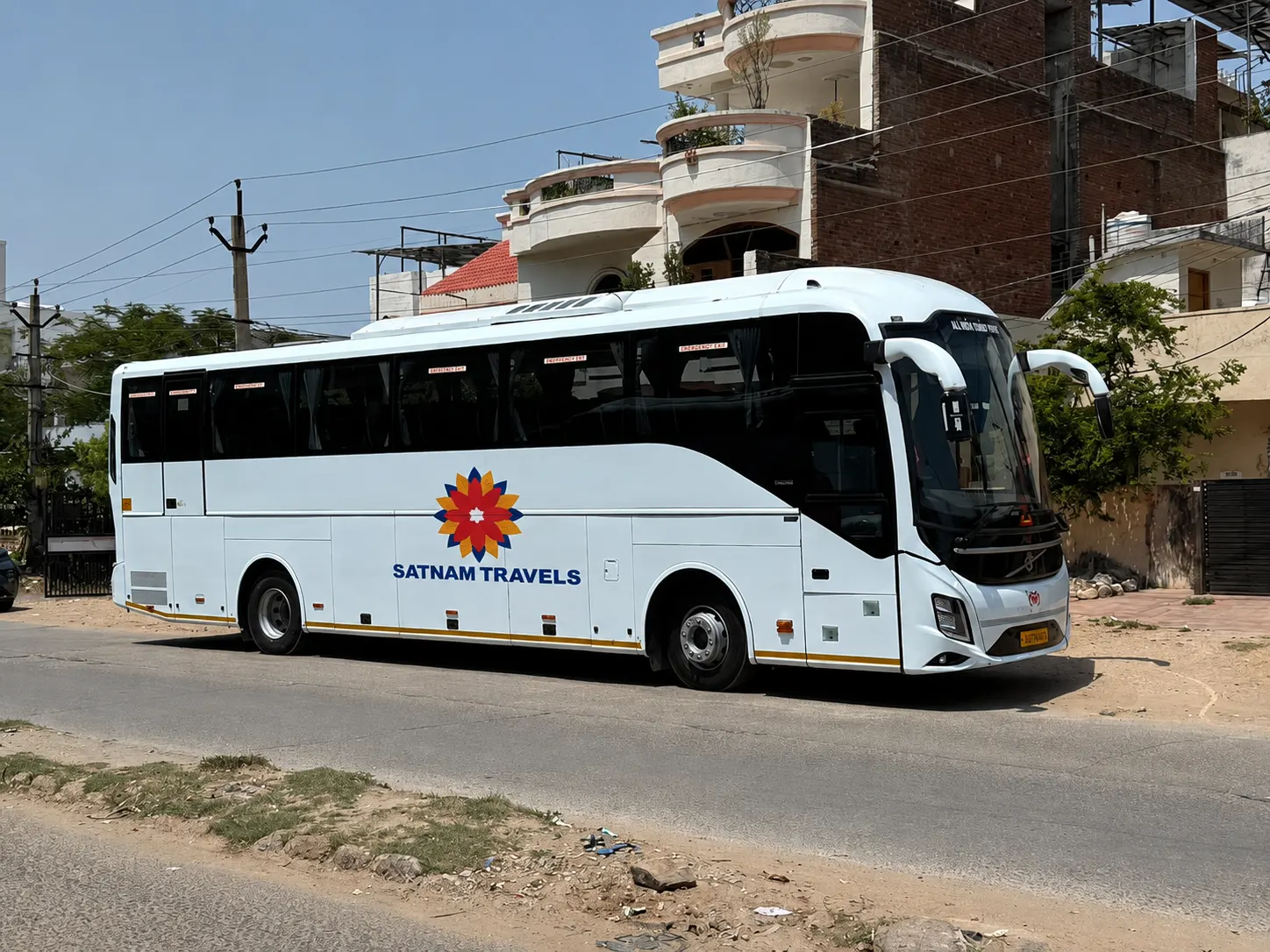
Volvo 9600
- Capacity: 45+ Passengers
- Luggage: Large Under-floor Luggage Hold
- Features: Push-back Seats, Powerful AC, Smooth Suspension, Music System
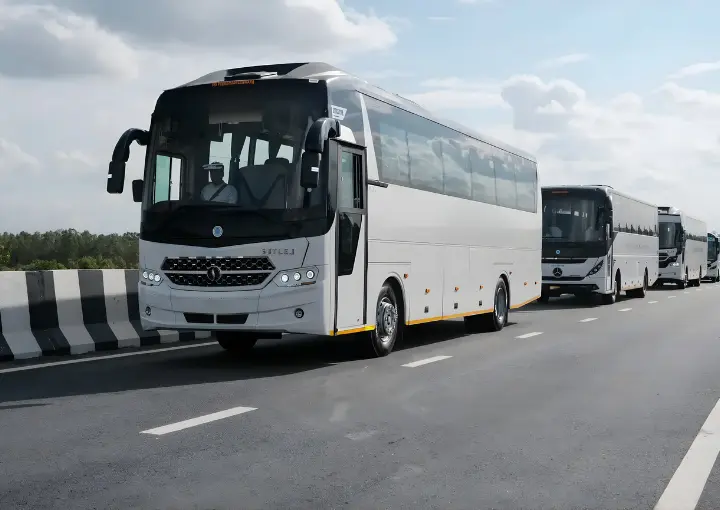
MG Glider Bus
- Capacity: 45+ Passengers
- Luggage: Large Luggage Hold
- Features: Premium Interiors, Powerful AC, Comfortable Seats, Long Route Ready
Jaipur to Mount Abu Travel Cost — What to Budget
Here are realistic cost estimates across all three major travel modes. Prices vary with season, advance booking, and vehicle type.
Best Time to Visit Mount Abu from Jaipur
Unlike most of Rajasthan, Mount Abu is genuinely pleasant year-round thanks to its altitude (1,220 metres). That said, each season has its own distinct character — choose based on what kind of trip you want:
October – March
The ideal time for the Jaipur to Mount Abu road trip. Cool, clear days on the highway and crisp mountain air once you arrive. Mount Abu winters are genuinely cold at night (near 0°C in January) — bring a proper jacket.
- Peak tourist season — book accommodation and cabs at least 2 weeks ahead
- Winter Festival (Dec) draws large crowds; roads into Abu can be congested
- Nakki Lake is at its most beautiful in clear winter sunlight
- Best photography conditions at Dilwara Temples and Guru Shikhar
- The Aravalli hills drive is clear and atmospheric
April – June
This is actually one of the busiest seasons for Mount Abu — because while Jaipur and Rajasthan's plains are baking at 42°C+, Mount Abu sits at a comfortable 23–28°C. It's the hill station Rajasthan locals escape to in summer.
- Accommodation books up fast — reserve well in advance
- The drive from Jaipur is hot; depart before 6:30 am
- Carry extra water and snacks for the highway stretch
- Summer Carnival (May/June) is a lively local event
- Hotel rates are higher than shoulder season
July – September
Monsoon transforms the Aravalli hills into deep green — the drive from Pali to Sirohi is genuinely beautiful in the rains, and the mountain road up to Abu is atmospheric. But the hairpin bends require extra caution on wet roads.
- Check weather forecast before driving; avoid heavy rain days
- The mountain ascent takes 30% longer in wet conditions
- Nakki Lake fills dramatically — the best it looks all year
- Waterfalls appear throughout the hills — worth the detour
- Fewer tourists, better hotel rates, quieter attractions
Road Trip Checklist: Before You Leave Jaipur
This is a longer, more demanding drive than the Jaipur–Udaipur run. The mountain road at the end adds a dimension that requires specific preparation:
- Leave by 6:30 am — Clear Jaipur traffic early and arrive at the mountain base before 3 pm for a comfortable ascent in daylight
- Full tank in Jaipur, top up in Sirohi — Petrol stations inside Mount Abu are limited and charge more; always fill in Sirohi
- Check tyre condition before departure — Mountain roads are demanding on tyres; check pressure and tread, and confirm you have a functioning spare
- Download offline maps through the route — Signal is inconsistent between Pali and Sirohi; save the route offline before leaving Jaipur
- Cash for tolls and entry checkpoint — Several toll plazas on NH48, and the Mount Abu entry barrier collects vehicle fees in cash
- Complete the mountain ascent before dark — The Sirohi–Mount Abu road has no lighting; driving unfamiliar hairpins after dark is not advised
- Pack a warm layer even in summer — Mount Abu nights at 1,220 metres can be 10–15°C cooler than what you left behind in Jaipur
- Carry 3 litres of water per person — The highway stretch through Rajasthan dehydrates you faster than you'd expect
- Plan Pali as your lunch stop — It falls almost exactly at the halfway mark and has the best highway restaurant options on the route
- Book accommodation before you travel — Mount Abu has limited quality options; peak season properties fill weeks ahead
What to See and Do in Mount Abu
Mount Abu is compact — most of the key attractions are within a few kilometres of Nakki Lake in the town centre. Two full days is the right amount of time for a comfortable first visit. Here's how to use them well:
Welcome to Satnam Travels
Frequently Asked Questions
The Jaipur to Mount Abu journey covers nearly 500 km and the better part of a day on the road — but it ends with something no other Rajasthan destination offers: the cool, quiet, forested air of a hill station that has been drawing travelers for well over a century. The final climb through the Aravalli ridgelines, with the temperature dropping noticeably as altitude builds, is one of the best arrivals in the state.
Plan your departure early, stop properly at Pali, fill your tank in Sirohi, and complete the mountain ascent before dark. Do those four things and the journey takes care of itself. And if you want an experienced driver who has handled this run dozens of times — the mountain road included — Satnam Travels has you covered from door to door, with transparent pricing and vehicles prepared specifically for long-distance hill station travel.